Author: Munir Bhimani

  • Why Muslims Give Qurbani

    Why Muslims Give Qurbani

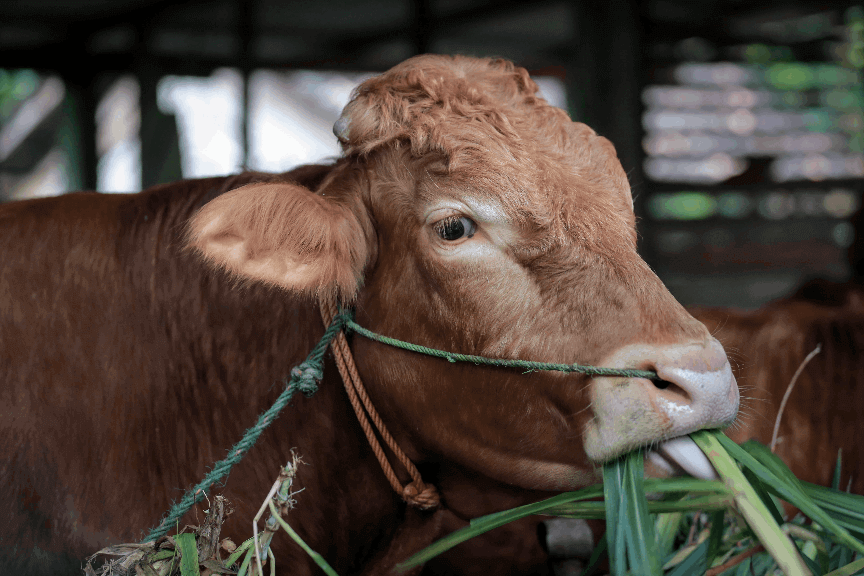
    As only licenced slaughterhouses are permitted to carry out the sacrifice in most countries, such as the United Kingdom, Muslims will, instead, donate equating the value of a share of meat to a charity that would then ensure the sacrifice and distribution of meat takes places in accordance with Islamic protocol.

    Sharing With Those Most Vulnerable

    It has been very much enshrined in Islamic culture to make sure that we do not indulge ourselves while our brothers and sisters go without. Thus, the Qurbani sacrifice is shared in three equal ways, with those who fall into the poor and needy category receiving the same sized share as the person making the sacrifice, and their friends and family.

    Why Do We Do Qurbani?

    Qurbani derives from the sacrifice that Ibrahim (AS) was willing to make as a sign of his unwavering devotion to Allah (SWT). Following God’s word, Ibrahim (AS) agreed to sacrifice what he loved more than anything else, which was his son, Ismail (AS). Ibrahim (AS) walked his son to the top of Mount Arafat and explained to his son the message that was shared in his dream.

    Ismail (AS) agreed on two conditions. Firstly, that he was bound by rope so that he could not struggle and, secondly, that his father be blindfolded during the sacrifice so that he would not have to witness his pain and suffering. Ibrahim (AS), then, set about conducting the sacrifice by binding his son in rope, blindfolding himself, and taking a knife to Ismail (AS).

    Ibrahim (AS) carried out the sacrifice and removed the blindfold, but what he witnessed was not what he had prepared himself for. Ismail (AS) stood before him unbound and unharmed as a divine miracle had taken place and Allah (SWT) spared the life of Ibrahim’s (AS) son. In his lap lay the body of a ram that had been switched with Ismail (AS). It was bound in the same rope that Ibrahim (AS) had tied his son in.

    Giving Qurbani Rules

    Traditionally, it’s expected that every qualifying Muslim will sacrifice a livestock animal in the name of Allah (SWT). The meat from this animal will be distributed in three equal ways between the donor, the donor’s family and friends, and someone in need. Giving Qurbani in the UK tends to be slightly different, meaning that qualifying individuals will make a donation in place of a sacrifice.

    When Do You Give Qurbani?

    All sacrifices must be made during the three days of Eid al-Adha, which, in 2022, falls between Saturday 9 July and Tuesday 12 July. Any sacrifices made before or after this timeframe will not count towards Qurbani. Donations should be made as early as possible to ensure the sacrifice can take place in the allotted timeframe and count as Qurbani.

    Who Gives Qurbani?

    If you’re wondering “Who is Qurbani compulsory on?”, it refers to all eligible Muslims. This eligibility is determined by a person being over the age of puberty, being of sound mind, and having a disposable income that meets the Nisab threshold.

    The Benefits of Qurbani

    The biggest benefit of Qurbani is that it pleases Allah (SWT) and is an act of worship; however, its benefits are plentiful. It’s also a reminder of Ibrahim’s (AS) sacrifice, is an indication of true faith, results in reward and protection, and is also an expression of gratitude to Allah (SWT).

    Please donate your Qurbani to Children of Adam, allowing us to distribute shares of meat to all those who are most deserving.

  • The Fifth Pillar of Islam

    The Fifth Pillar of Islam

    In Islam, there are Five Pillars that signify the five key principles that Muslims base their life around. These are Shahadah, Salat, Sawm, Zakat, and Hajj, which Allah (SWT) has made compulsory for all able Muslims. Hajj is the fifth pillar, and it refers to the pilgrimage to Mecca that all Muslims must embark on at least once in their lives. This pilgrimage takes place during the month of Dhul Hijjah, which is the last month of the Islamic calendar that is rounded off by Eid ul-Adha prayers.

    The Hajj is intended to foster the connections of Muslims through recognition of the fact that Allah (SWT) regards every individual as equal. Ultimately, the Hajj removes all indicators of pride, wealth, and social status, which encourages Muslims to accept life’s true meaning. These markers are removed by the pilgrims wearing basic white garments, otherwise known as Ihram, whilst they worship and revive their life’s true purpose.

    What is Qurbani?

    Qurbani, otherwise known as Hajj Qurbani, is the act of sacrificing an animal in the name of Allah (SWT). The importance of Qurbani in Islam is one and the same as the significance of Hajj, as it is a means of reminding ourselves that it’s our duty to make any sacrifice that Allah (SWT) wishes us to make. Although it’s traditional to make your Qurbani sacrifice during the Hajj, doing Qurbani in the UK often refers to making a Qurbani donation to a UK Qurbani charity, such as Children of Adam. Despite this, the Qurbani meaning must not be lost, and we must always understand our duty to Allah (SWT).

    History of the Hajj

    It’s widely believed that Allah (SWT) instructed the Prophet Ibrahim (AS) to take his wife, Hajira (AS), and their son, Ismail (AS) to Arabia from Palestine to defend them from Ibrahim’s (AS) first wife, Sarah’s jealousy.

    Following this, Allah (SWT) also instructed that Ibrahim (AS) leave the two alone, to which he obliged and left a handful of supplies. These supplies soon wore thin, causing Hajira (AS) and Ismail (AS) to suffer from dehydration and hunger. As a result, Hajira (AS) desperately roamed the two hills called Marwa and Safa in search of help; however, the exertion caused her to collapse and pray for deliverance.

    Upon Hajira’s (AS) collapse and prayer, Ismail (AS) stomped on the floor and water began to gush from the earth; Allah (SWT) had saved them. Ibrahim (AS) returned to find his family running a successful well.

    Allah (SWT) then instructed Ibrahim (AS) to construct a shrine devoted to Him, to which Ibrahim (AS) and Ismail (AS) crafted a modest rock formation. This soon became the place of gathering of those who wanted to bolster their connection with Allah (SWT) and was called the Kaaba.

    Over the years, Ismail (AS) obtained prophethood and spread the teachings of Allah (SWT) throughout Mecca, which soon became a flourishing city due to the well of Zam Zam. Despite this, it soon became a space of polytheistic ideas, which goes against the teachings of the Qur’an.

    In order to amend this, Allah (SWT) sent the Prophet Muhammad (PBUH) on a voyage alongside 1400 of his followers to restore Islamic teachings. This was the initial pilgrimage to Mecca.

    Guide to Going to Mecca

    Upon reaching Mecca, it’s expected that Muslims will undertake two pilgrimages: the small pilgrimage of Umra and the main Hajj. Despite this, the Umra is optional and won’t be regarded as Hajj in the eyes of Allah (SWT).

    Being Pure

    Hajj is all about purity and must be conducted in a complete state of Ihram. This Ihram is achieved via a statement of intention, the wearing of white clothes, and observing the Hajj regulations. These regulations include the refrainment from:

    • Marital relations
    • Shaving or cutting of nails
    • The use of scented oils or colognes
    • Arguing or fighting

    Similarly, women aren’t permitted to cover their faces, and men aren’t allowed to wear clothes with stitching. Finally, bathing is permitted, but perfumed soaps aren’t appreciated.

    Umra

    In order to begin the Umra, you start at the Miqat, which is a location on the outskirts of Mecca. Here, you wear the Ihram and recite the Talbiya Du’a, as this is the declaration of your intention for Umra.

    Following this, you will repeat prayers and Du’as whilst you circle the Ka’ba seven times. This is called the Tawaf; after the Tawaf, you’re required to drink some Zam Zam water. After this, you make your way to the corridor between the hills of Marwa and Safa and walk between them seven times.

    Hajj

    Upon completing the Umra, you can declare your intention for the Hajj and wear the Ihram again. Next, you make way to Mina on the 8th Dhul Hijjah and stay there until Fajr (dawn) the following morning. After this, you make way to the valley of Arafat and praise Allah (SWT) in the open. As the day comes to a close, you make way to Muzdalifa and collect 49 or 70 small rocks for the following day.

    These stones will be thrown at pillars (Jamraat) the following morning in Mina and Qurbani will be made. Following this, men’s heads are shaved, whilst women cut a lock of their hair before returning to Mecca and making a Tawaf.

    Once Tawaf has been made, you return to Mina for three or four days in which the pillars will once again be stoned. Lastly, a farewell Tawaf will take place on the 12th Dhul Hijjah in Masjid-al Haram before Allah (SWT) is asked for forgiveness and Du’a is made.

    Donate Qurbani to Children of Adam

    If this isn’t your year to embark on the Hajj, fulfil your Islamic duty by donating your Qurbani to Children of Adam.

  • What is the Current State of Gaza

    What is the Current State of Gaza

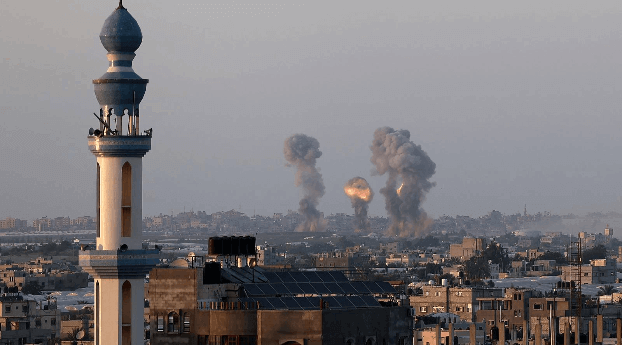
    The Gaza strip has experienced devastation after devastation, with the latest wreckage killing 230 people and injuring 1,900 inhabitants. Out of the 230 dead, 63 of them were helpless children, whilst an additional 60,000 people were left homeless. As well as this trauma, the residents of Gaza are subjected to airstrikes on an almost nightly basis due to an ongoing conflict.

    Everyone should feel safe in their own country, yet this isn’t a luxury that Palestinians have. Not only do they constantly fear impending violence, but the economy has been destroyed by political insecurity. Additionally, disarray is regularly caused by blockades and the healthcare system is struggling to accommodate everyone in need. Furthermore, thousands of Palestinian families are struggling to make ends meet, with a third of the population living under the poverty line. Your donations can help make a difference.

    Gaza Refugees

    Roughly 75% of Gaza’s population is made up of refugees, meaning there are eight different refugee camps in the strip. Due to recurring wars, these camps soon evolved from being made up of tent shelters to areas of semi-permanent housing. The people who are subjected to these living conditions experience unemployment, a lack of education, overcrowding, and poverty. These individuals need your help more than ever.

    The Gaza Strip

    From as early as 2007, the Gaza strip has been in the midst of a blockade and its economy has been crippled as a result. Essentials such as medical supplies and food goods are either heavily restricted or completely banned from crossing borders. This means poverty is endemic, and inhabitants of Gaza aren’t able to access vital medical equipment.

    It’s not uncommon for hospitals in Gaza to be unable to treat seriously ill people due to limited modern equipment. This is particularly detrimental for an area that suffers from unsafe water, poor sanitation, and no sewage systems. The lack of sewage networks means that waste roams the streets, making so many inhabitants susceptible to illnesses. If this wasn’t enough, Gaza suffers from an unreliable source of electricity and fuel, resulting in constant power cuts to contribute to the struggle.

    Gaza Power Crisis

    Electricity is an essential worldwide; however, it’s particularly vital to the residents of Gaza. Since the water in the region is not clean, it must be purified via electric power and, in the absence of this, people are forced to drink dirty water or simply go without. Both of these options are deadly, whether someone is infected with diarrhoeal illnesses from consuming unsafe water or if dehydrate from the lack of clean water.

    Similarly, much of Gaza’s farming equipment relies on electricity, and the unpredictability of power leaves farmers and citizens alike in extremely vulnerable positions. In the absence of farming, Gaza will simply have to go without food due to the blockades that prevent imported food from entering the country.

    How to help Gaza

    Countless violent protests, destructive bombings, and endless blockades have put a real strain on Gaza’s population. With limited building resources, a meagre food supply, and empty opportunities, the people of Gaza are slowly losing any hope of a better future. Here at Children of Adam, we’re stepping in to provide humanitarian aid to give Gaza’s inhabitants a chance at life. You can help by donating to our charity appeals that are designed to help repair the state of Gaza. These people need your help.

    What the future holds

    Unfortunately, the problems in Gaza are set to get worse in the coming months as winter approaches. The threat of winter promises the development of many seasonal illnesses, including the further spread of the Coronavirus that will overwhelm already struggling health facilities. We have developed our Winter Appeal to assist those who are struggling to fight against bitter weather conditions and their effects.

    Additionally, the conflict is not likely to be resolved any time soon because many peace plans have been rejected as unfair and one-sided. In order to amend such complex issues, another peace deal will have to be proposed that satisfies each party.

    Donate to Children of Adam

    Our Gaza Charity Appeal aims to provide water tanks and distribute food to those living in active warzones. The current state of the Gaza strip means that dehydration, disease, and hunger will only contribute to an already dire condition. However, our work isn’t possible without your generous contributions, so please, donate what you can.