Author: Munir Bhimani

  • What is Qurbani?

    What is Qurbani?

    [quick_donate_form]
    [qurbani_appeals]

    QURBANI 2024 FAQS

    Before we can go on to discuss what Qurbani teaches us, we must first establish what Qurbani is. Qurbani is an extremely significant religious duty, whereby Muslims sacrifice an animal after Eid ul-Adha prayers in the name of the Sunnah of Ibrahim (AS). In spite of this sacrifice, Qurbani is an incredibly joyous occasion filled with wisdom and happiness, as it reminds us of the rewards that we’ll obtain upon making the necessary sacrifices for Allah (SWT).

    Qurbani is compulsory for every eligible Muslim. In order to be eligible, one must be of sound mind, above the age of puberty, and their wealth must meet the Nisab threshold.

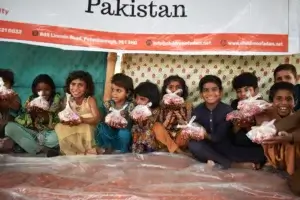
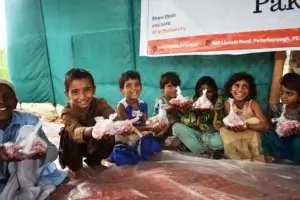
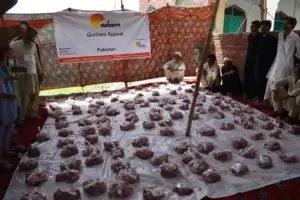
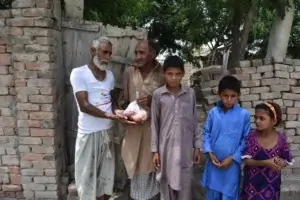
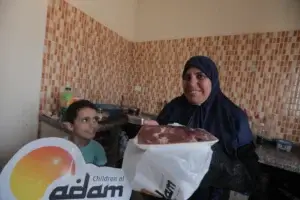
    Traditionally, Qurbani meat was distributed among the donor, the donor’s family, and the needy; however, slaughter laws in the UK have caused a shift in tradition. Today, Muslims tend to make a Qurbani donation to a UK Qurbani charity, whereby their donation is used to sacrifice an animal in an Islamic country by word of the Qur’an, and the meat is then distributed to those in need.

    Speaking of those in need, helping the needy is the primary answer to “Why do we do Qurbani?” Qurbani teaches us about the importance of helping our neighbours, as we’re all equal in the eyes of Allah (SWT). Therefore, it’s the role of capable Muslims to ensure that our neighbours are in good spirit and health. The same can be said for Muslims in need, who otherwise wouldn’t know where their next nutritious meal is coming from. Qurbani allows us to look out for those who really need it, which levels the playing field and inhibits us from the sin of greed and hoarding wealth.

    Quite simply, Qurbani is all about imitating the Prophet Ibrahim’s (AS) sacrifice of his son, Ismail (AS). Allah (SWT) commanded that Ibrahim (AS) sacrifice his son in order to display the pair’s devotion to Him. Ibrahim (AS) obeyed Allah (SWT) without question; however, he wore a blindfold so that he wouldn’t have to witness his son’s suffering, whilst Ismail (AS) asked to be bound by ropes so he couldn’t struggle.

    Upon making the sacrifice, Ibrahim (AS) removed his blindfold to find Ismail (AS) alive and well. Allah (SWT) had replaced Ismail (AS) with a ram as a reward for the pair’s unwavering faith in Him.

    Every year, Muslims across the globe convey this same faith and devotion by performing a Qurbani sacrifice or making a Qurbani donation. As Muslims, we must obey Allah’s (SWT) word, no matter how painful the sacrifice is. Our unconditional love for Him tells us that He knows best, and His commands are given to benefit us, even if we don’t know it yet.

    As Muslims, we must join together and do all we can to join together and serve Allah (SWT) as one. Qurbani presents the ideal opportunity to be rid of grudges, create new friendships, and strengthen family bonds. During Qurbani, Muslims across the globe unite as one Ummah, which brings the members of the community closer to one another and builds greater awareness of those in need.

    Regardless of social status, wealth, or other labels that get attached to us during our time on earth, we’re all equal in the eyes of Allah (SWT). Since the traditional concept in Qurbani is to divide the meat into three separate parts, it reminds us that we’re held in the same regard as our neighbours and the needy alike, and not one of us is more entitled to meat than the other. No one deserves to go hungry, and the ritual of Qurbani helps reinforce this message.

    In the UK, we purchase the meat that we eat from a supermarket or butcher, wherein the animal has already been prepared for eating. This enables us to separate the meat from the animal, which reduces the level of empathy that we have. Qurbani sacrifices remind us that meat comes from a once living and breathing animal that Allah (SWT) graced this earth with. It’s an Islamic duty to feel compassion for every sentient being, and Qurbani teaches us to express this empathy, as we make the connection between animal and meat.

    There is a lot to be learnt from Qurbani, and as we approach this holy ritual, we should take the time to reflect upon what Qurbani teaches us. Read on to discover more about the importance of Qurbani in Islam.

    Donate Qurbani to Children of Adam

    Here at Children of Adam, we accept your Qurbani 2024 donations. Donate to fulfil your Islamic duty today.


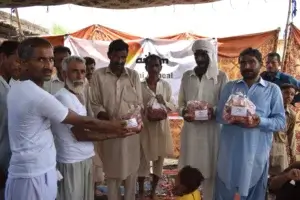
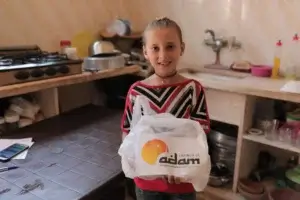
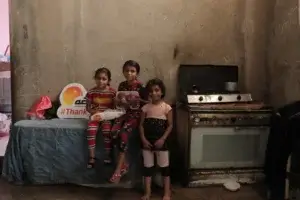
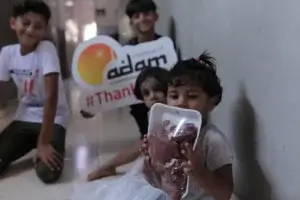
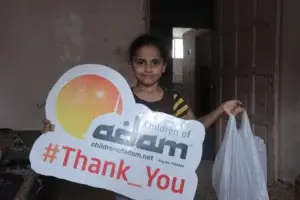
    OUR PREVIOUS QURBANI DONATIONS

    PAKISTAN
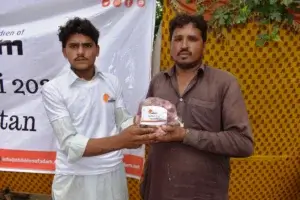
    GAZA

  • What to do in the month of Rabi ul Awwal

    What to do in the month of Rabi ul Awwal

    It was in this month that the Prophet Muhammad (PBUH) was born in Makkah, and many Muslims celebrate this. While most Muslims believe that the Prophet (PBUH) was born on the 12th day of this month, there is a difference of opinion with regards to this, as some say it was the 17th, but it is agreed that he was born on a Monday. This month is also said to mark Prophet Muhammad’s journey from Makkah to Medina, known as the Hijrah, as well as his death.

    Unlike Ramadan or other months, there are no requirements or recommendations to fast, pray or complete specific acts, but the events that took place in this month make it blessed, which encourage good deeds.

    There were several miracles around the birth of the prophet (PBUH), including that his mother, Aaminah, saw light within her when she was pregnant with him, and when his wet nurse, Halima al Sa’diyah, took the prophet to nurse him and was blessed for several years afterwards. This sacred month acts as a reminder of the birth and life of the Prophet Muhammad (PBUH), and prompts us to learn more about his character, which as Muslims, we should strive to replicate. In this month, many Muslims study the Seerah, which is the biography of the prophet’s life, and this can be a means of feeling closer to the prophet, and understanding him better, who was the best of creation.

    The migration, known as the Hijrah, was also a very significant event that occurred in the month of Rabi ul Awwal. This journey was from Makkah to Yathrib, which is known today as Medina. This was important for the Muslims at the time as it united them and was the beginning of a new life and the growth of Islam.

    The prophet’s death also occurred in this month in the 11th year of Islam, and despite being ill for a number of days, his death came as a shock to the Muslims. Many were in disbelief, including Umar, the companion of the prophet, who threatened to hurt anyone who claimed that Prophet Muhammad (PBUH) had passed away. In this situation, Muslims can look to Abu Bakr’s words to seek solace: ‘O people! If it was Muhammad whom you worshipped, then know that he is dead. But if it is Allah (SWT) whom you worshipped, then know that He does not die’. This reinforces the belief in one true God, who has no partners or associates, and reminds Muslims that our death is inevitable, which should motivate us to spend our lives wisely in seeking Allah’s pleasure.

    This Rabi ul Awwal in 2022, try to follow the Sunnah of the Prophet Muhammad (PBUH), and learn more about his life, including his sacrifices for Muslims and his beautiful character. In this month, you may choose to increase your Quran recitation, make dua, or follow the prophetic teachings of the prophet (PBUH), like visiting neighbours, helping the sick, and smiling more, all of which will strengthen your faith and closeness to Allah (SWT), Insha’Allah. Giving charity to the poor and needy in this month can also bring great reward, as it was a regular practice of Prophet Muhammad (PBUH), and the importance of charity is shown through Zakat being a pillar of Islam. Use this month to be grateful to Allah (SWT) for our blessings and continue any good deeds throughout the year to seek Allah’s pleasure, such as giving voluntary charity. By following the teachings and practices of the prophet (PBUH), we can become closer to him, strengthen our faith, and better ourselves.

  • Stop The Suffering Of Yemen This Winter

    Stop The Suffering Of Yemen This Winter

     Life for the Yemeni people is a daily struggle to find the most basic of food, and medical care, leaving millions in a situation of acute starvation and risk of death.

    Yemen famine – a country on the brink of starvation

    To add to the already desperate situation, two-thirds of major UN aid programmes announced at the start of 2022 that they were having to reduce funding or close down completely. As a result, many aid agencies have been forced to scale back their operations. These disastrous policies have struck the Yemeni people hard, as they struggle to fill the gap left by these agencies, and it is only going to get worse as further funding cuts are on the horizon.

    In practice, what this means is that while five million families will continue to receive the full ration of food parcels provided by the United Nations World Food Programme (which covers basic necessities – just), a further eight million Yemeni families will have their food rations cut even more, plunging them into food poverty and acute risk of starvation. They will receive barely half of their most basic daily nutrition needs, which is inevitably leading to an increase in malnutrition and premature deaths.

    In numbers, the forecast is grim – over half the population – 16.2 million people, face acute starvation. Half of the children under the age of five (about 2.3 million and falling) are at risk of malnutrition.

    Deepening economic crises

    Yemeni’s problems are complex and deeply entrenched in civil conflict and corruption but, over the last 10 years, those problems have intensified to produce a cycle of violence, political upheaval, and institutional collapse. As a result, the country is operating under a beleaguered economic system that has seen massive currency devaluation and hyperinflation add to the overall rise in the cost of living, leaving many families destitute. The Yemen famine can be understood when you consider that the World Food Programme needs US$1.97 billion to deliver food to those families who are on the absolute brink of starvation.

    In 2021, food prices more than doubled as currency rates dropped. If global food programmes struggle to feed the Yemeni people adequately, what hope do the people have of finding food for themselves? Increasingly these organisations are turning to grassroots charities such as Children of Adam to further assist how you can help Yemen through the worst of the crises.

    A worsening medical crisis

    Eroded by famine, conflict, and lack of investment, overrun by the effects of malnutrition on the general state of the population’s health, the Yemeni health service is barely functioning. As well as the effects of malnutrition and the added pressure of Covid19, the demographic most at risk are pregnant women.

    It is estimated that there are five million women of childbearing age in Yemen, of which 1.7 million are pregnant or breast feeding at any one time. These women have little or no access to reproductive health services, including antenatal care, safe delivery, postnatal care, family planning, and emergency obstetric and newborn care. This crisis in care has led to:

    • Over one million pregnant and breastfeeding women becoming malnourished, leading to newborns with stunted growth.
    • One woman dying every two hours in Yemen during childbirth from almost entirely preventable causes.
    • A maternal mortality of 164 maternal deaths per 100,000 live births.

    As well as the overall risk to women and children, hundreds of thousands of Yemenis are struggling to deal with routine health issues that would normally be dealt with quickly and competently in wealthier countries. The country’s life expectancy is just 63.27 – significantly lower than the international average.

    Shortage of care, lack of medicines, lack of a referral system, severe infrastructural damage, underfunding, and understaffing means that most Yemenis are restricted access to medical services, contributing to an increase in the death rates of those who would normally be successfully treated.

    How you can help the people of Yemen

    Since funding by the United Nations World Food Programme was cut, aid agencies are becoming ever more reliant on outside sources to help them supplement food rations and medical care that is being given to the Yemeni people. Yemen-focused charities are increasing their efforts to increase funding levels that can be spent on alleviating the Yemen famine crisis, increasing the levels of nutrition to a population that is fighting for its very survival.

    Even a small increase will help the Yemeni children and women to fight the worst of malnutrition and start to rebuild health and immunity.

    If you would like to help ease the desperate humanitarian crisis in Yemen, that so many millions of its people have unwittingly found themselves in, please donate as much as you can. You’ll be saving many lives.