Category: News

  • What We Are Doing in Gaza This Winter

    What We Are Doing in Gaza This Winter

    Our Winter Appeal

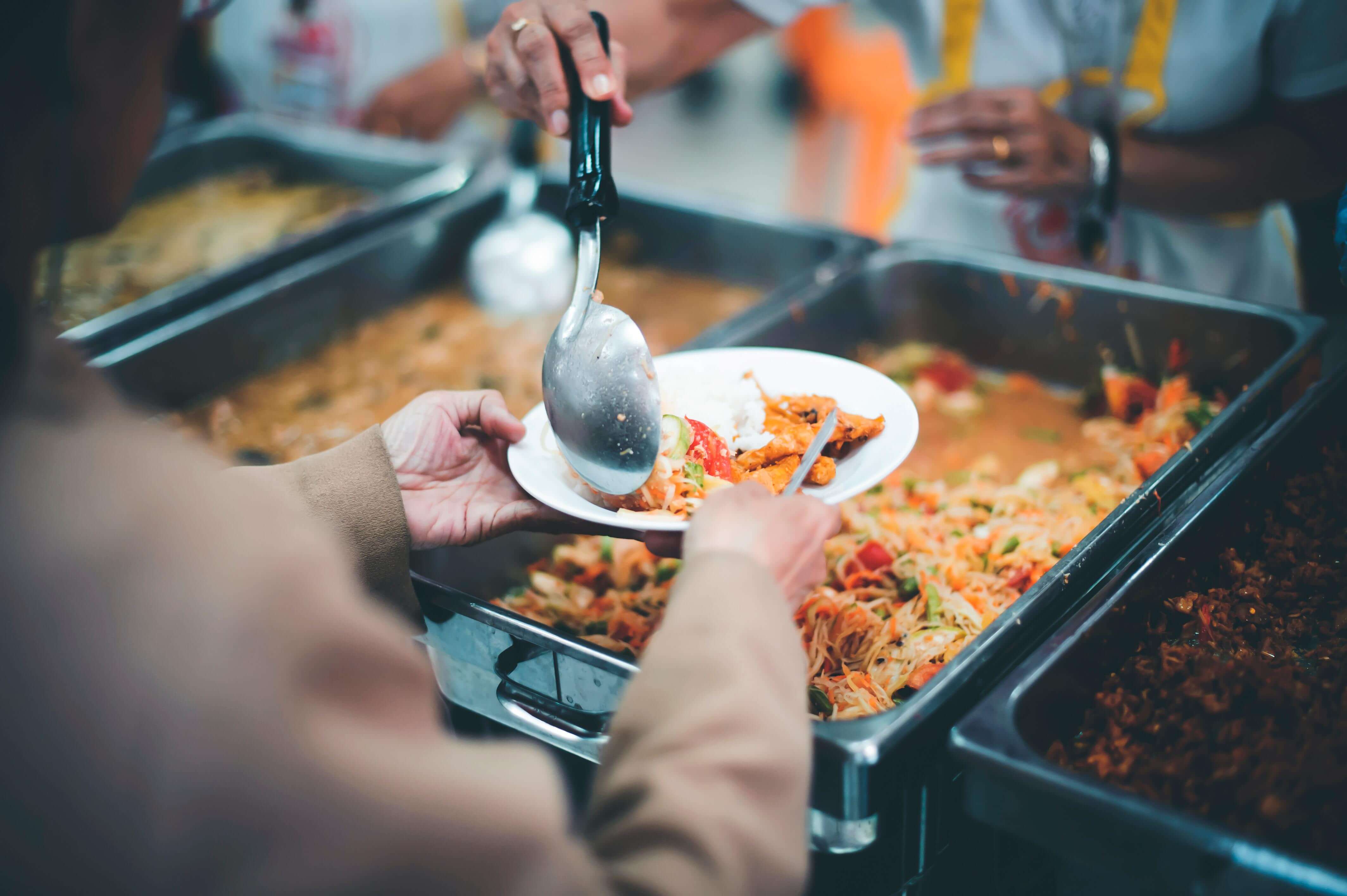
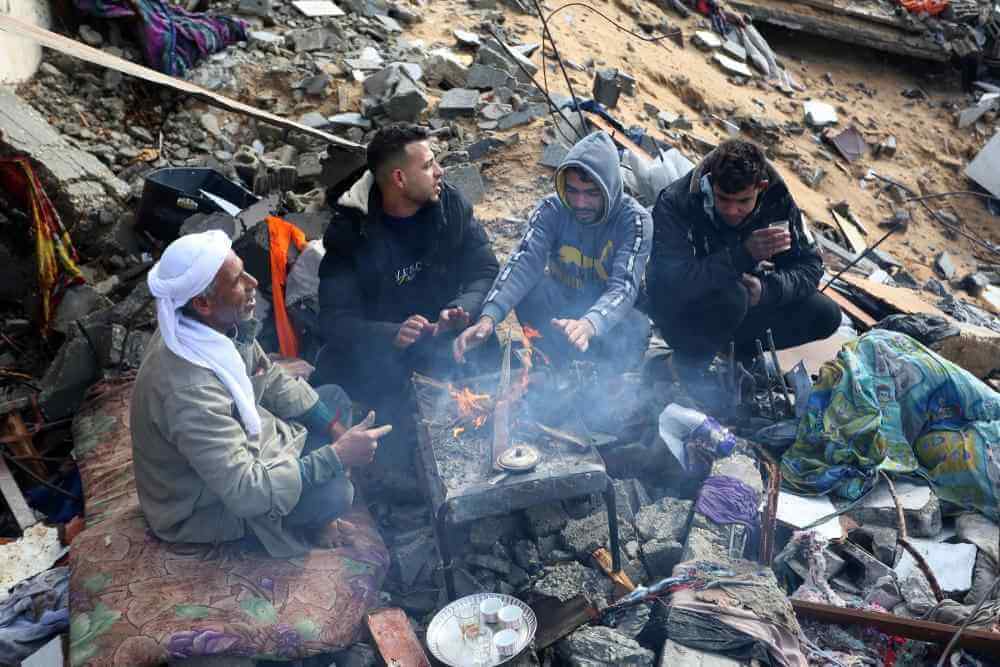
    We provide food such as pasta, oil and rice, clothes and blankets, and wood, gas and electricity to households that suffer from the harsh winter. We can only do this with your help! Your donations will allow us to provide these necessities for families in Gaza which will help them to get through winter.

    Every year, thousands of people die during the winter. In Palestine and Gaza, deaths are often due to winter-related illnesses and the cold that puts the vulnerable at risk. While we are protected with clothes, heating and annual flu jabs, which we often take for granted, many people do not have these essential provisions. With the basic items we give to these families, the survival rate is much higher, and getting through winter becomes a lot easier.

    “Whoever feeds a hungry believer, Allah will feed him with the fruits of Paradise; and whoever gives a drink to a thirsty believer, Allah will quench his thirst (on the Day of Judgment) with an exquisite drink of Paradise; and whoever clothes a believer, Allah will clothe him with a green robe of Paradise.” (Tirmidhi)

    This winter, we want to continue to support those in need, particularly those in Palestine and Gaza, who are often vulnerable in winter due to a lack of provisions. Please donate what you can to our winter appeal to allow us to continue to supply these provisions for them, and the reward in this is great, both for you and for the recipients of your charity.

    The Prophet Muhammad (PBUH) said, ‘The believer’s shade on the Day of Resurrection will be his charity.’ (Tirmidhi)

    By donating to Children of Adam to support this appeal, you will be giving Sadaqah Jariyah. This type of charity can gain plentiful reward for the giver, even after they pass away, as it has continuous rewards attached to it. Giving this type of charity will ultimately increase your position in the afterlife, and it also ensures your own welfare and happiness, as shown in the hadith, “Give Sadaqah without delay, for it stands in the way of calamity” (Tirmidhi).

    How you can help the people in Gaza and Palestine

    Please donate what you can to our appeal to ensure that the poor, needy and vulnerable in Gaza and Palestine are well cared for. Your donations will provide them with food, clothing, heating and other necessities to support them this winter.

    Will you support a family in Gaza this winter?

    £20 provides an individual with a hat, scarf, gloves, socks and a blanket, which greatly helps them in the harsh winter. Donate £20 here.

    £30 provides a family of 4-6 members with food, including pasta, oil, rice and flour, as well as other dry foods. Donate £30 here.

    £50 provides a family with heating in the form of gas, wood or electricity, which allows a household to battle the winter and stay warm. Donate £50 here.

    £100 provides all the above provisions; food, clothes and heating to support a family in need. Donate £100 here.
  • What is Hajj and Why is it Important?

    What is Hajj and Why is it Important?

    The Hajj pilgrimage takes place in the last month of the Islamic year, Dhul Hijjah, with the first day of Hajj taking place on the eighth day of the month. Its purpose is to offer Muslims the chance to start anew in the eyes of Allah (SWT), clearing themselves of any sins they may have as they seek the forgiveness of our merciful God by completing this physically demanding journey.

    It was the Prophet Muhammad (PBUH) who established the Hajj pilgrimage as we know it today, in which pilgrims will walk the same steps as Muhammad (PBUH) and Ibrahim (AS).

    Where is Hajj?

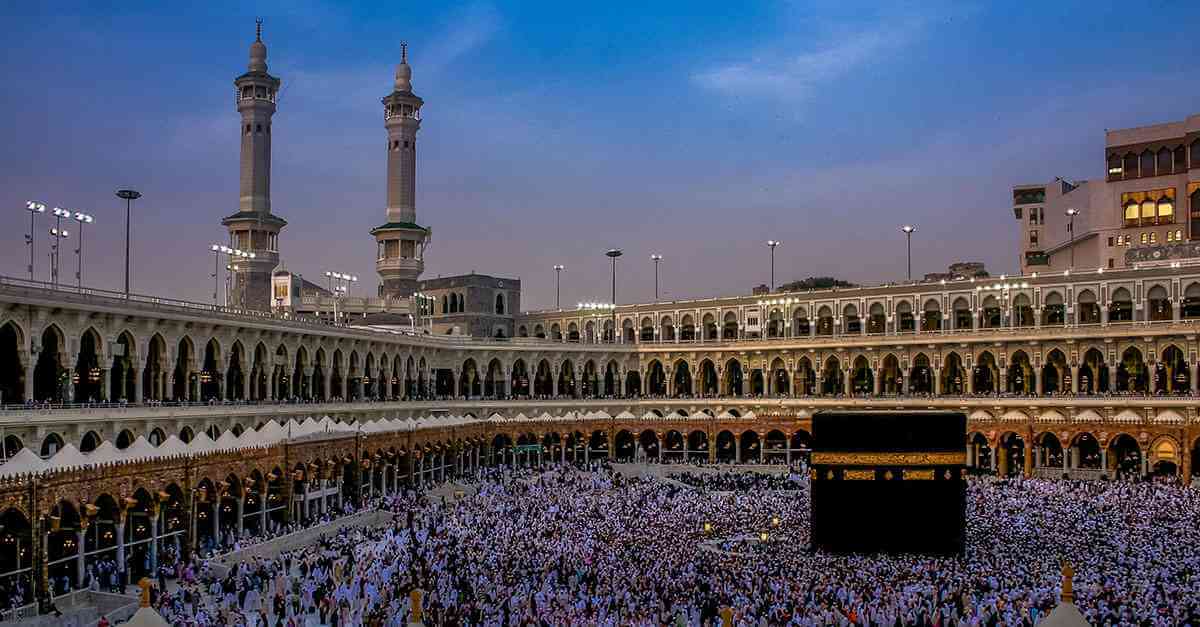
    Hajj is the pilgrimage to Mecca, Saudi Arabia, which also encompasses travel to Medina and Mount Arafat. Pilgrims will pray around the Kaaba at the centre of the Masjid al-Haram, the most important mosque in Islam.

    What is Hajj in Islam?

    Hajj, translated from Arabic, means ‘to attend a journey’. The pilgrimage is one of the five pillars of Islam and is considered to be one of the most sacred traditions that any Muslim could hope to undertake.

    How Long is Hajj?

    The Hajj pilgrimage lasts for five or six days, depending on when pilgrims can leave. On the fifth day of Hajj (12th day of Dhul Hijjah), Muslims may leave Mecca, but not before completing the Tawaf al-Wadaa, meaning ‘to bid farewell’, in which pilgrims walk around the Kaaba seven times counter-clockwise.

    Those performing the tawaf will try to touch and/or kiss the Kaaba as they circle it before leaving. Muslims who remain for the sixth day perform the stoning of the devil ritual (also performed on the fourth and fifth days of Hajj), in which they throw seven pebbles at the three pillars in Mina.

    When is Hajj 2021?

    The first day of Hajj 2021 is on Saturday 17 July, two days before the beginning of Eid al-Adha, which commences in the evening of Monday 19 July, lasting until Thursday 22 July.

    How to Perform Hajj?

    In 2021, Saudi Arabia has ruled that Muslims who live outside of the country are once again barred from completing the Hajj pilgrimage, as was also the case in 2020 when only around 1,000 residents in Saudi Arabia were permitted. This year, up to 60,000 residents have been permitted and the hope is that, as the pandemic continues to ease globally, the number of pilgrims completing Hajj in 2022 will be back in the millions.

    You can choose to donate to Children of Adam for Qurbani either by heading to our appeal page or via our dedicated donation page today.

  • Food Poverty in the UK

    Food Poverty in the UK

    The UK’s food poverty rate is among the worst in Europe, and the Covid-19 pandemic only worsened the already dire situation. Despite being the 6th richest company in the world, this issue is still rife and only getting worse.

    What is the definition of food poverty?

    By definition, someone in food poverty cannot afford to buy nutritious food or cannot get it due to it not being readily available in their area, or both. As well as going hungry, food poverty results in an inadequate diet as families must buy cheap and processed food items that severely lack nutritional value.

    Food insecurity can be a long-standing problem for an individual, however, sudden changes in personal circumstances can also have a short-term impact. For example, the Covid-19 pandemic resulted in many people being made redundant, leaving them unable to afford food.

    Officially, poverty is measured by a European standard; if one’s income is 60% less than the country’s average salary, they are classified as being in poverty.

    How many UK residents are in food poverty?

    If we take the European measure for poverty, 7.3% of UK citizens are in poverty. This equates to 4.6 million residents going hungry daily; however, this standard does not necessarily encompass everyone nationwide who is struggling to obtain food.

    It was reported that almost six million adults and 1.7 million children were unable to obtain ample food between September 2020 and February 2021. Other food poverty estimates for the UK are even larger, with some charities claiming that 8.4 million UK residents are experiencing food poverty, with BAME, disabled, and older people being the worst affected.

    What are the causes of food poverty?

    Usually, people find themselves affected by food poverty when their earnings are little or unpredictable. This is most often a result of low wages or a lack of support from the state welfare system. Similarly, living costs are rising at a much faster rate than the rate of pay.

    Ultimately, the idea that food poverty only affects the UK homeless and jobless populations is a myth. As many as 72% of children in families who cannot afford food have at least one working parent.

    Why is food poverty getting worse in the UK?

    The biggest contributor to food poverty across the UK is cuts to the welfare system, with benefit caps trapping many in poverty. According to government figures, up to 76,000 households were affected by the benefit cap prior to the Covid-19 lockdown. By November 2020, the number had skyrocketed to 180,000.

    Furthermore, child food poverty in the UK is rife, with nearly 20% of England’s comprehensive school children being entitled to free school meals. This is a huge 1.63 million out of 8.2 million children, and the government was not quick to compensate the meals during the absence from school over lockdown or holidays.

    Where is food poverty worst in the UK?

    The UK has a problem with “food deserts”; these are areas that are populated by 5-15,000 people who cannot access more than two supermarkets. Instead, these areas are filled with convenience shops which are typically more expensive and less abundant in fresh supplies. This forces people in these areas to go without nutritious food.

    One study discovered that the worst food deserts were Dalmarnock in Glasgow, Everton in Liverpool, Rumney in Cardiff, and Hattersley in Greater Manchester. Additionally, roughly 26% of children living in the North East of England qualify for free school meals, compared to 15% in the South East.

    How does food waste affect food poverty?

    Despite the food poverty in the UK statistics, as well as UK homeless statistics [UK homeless winter appeal link], so much food is unnecessarily thrown away. As much as 7.3 million tonnes of food waste was binned by households in 2015, whilst 41% of waste from food outlets is completely edible. These figures are eyewatering when we consider the millions of people who are forced to go without food daily.

    What can we do?

    MPs have called for the government to appoint a food security minister to monitor the progress of fighting food poverty. This is so that all families with children who qualify for free school meals are getting aid to put food on the table. To make a direct impact yourself, you can donate to our UK food poverty charity appeal so that we can continue our work of handing food parcels, clothing, and bedding to those in need.

    Almost 9 years of war has left over 11 million people in Syria in desperate need of aid.

    Millions have fled their homes and are displaced within the country, living without proper shelter, and with no food or warm clothes. While many have managed to seek refuge from war, winter is a threat they cannot escape.

    Winter in Syria can be extremely harsh, with periods of heavy snow and temperatures well below zero. Over 1.5 million children face freezing temperatures this winter, without warm clothes, good food, or shelter to keep them warm. Winter is every parent’s nightmare in Syria.

    If we do nothing, children will die. Make this a winter of mercy. Just £50 could provide a stove and coal for a family to make sure they have enough heat and warm food to last them the whole of winter.

    Temperatures drop below freezing at night during the winter months, and many of syrian’s poorest and most vulnerable people just don’t have the money to buy winter clothes or blankets. Millions of the country’s poorest people live in fear that they won’t make it through the winter