A Crisis of Existence for the Ummah
In the mid-13th century, the Islamic world faced an existential threat unlike any it had ever seen. The Mongol Empire, led by the descendants of Genghis Khan, had swept across Asia and into the heart of the Middle East. In 1258 CE, they sacked Baghdad, ending the Abbasid Caliphate and destroying centuries of knowledge, art, and architecture. The “unstoppable” Mongol horde seemed destined to erase Islamic civilization from the map.
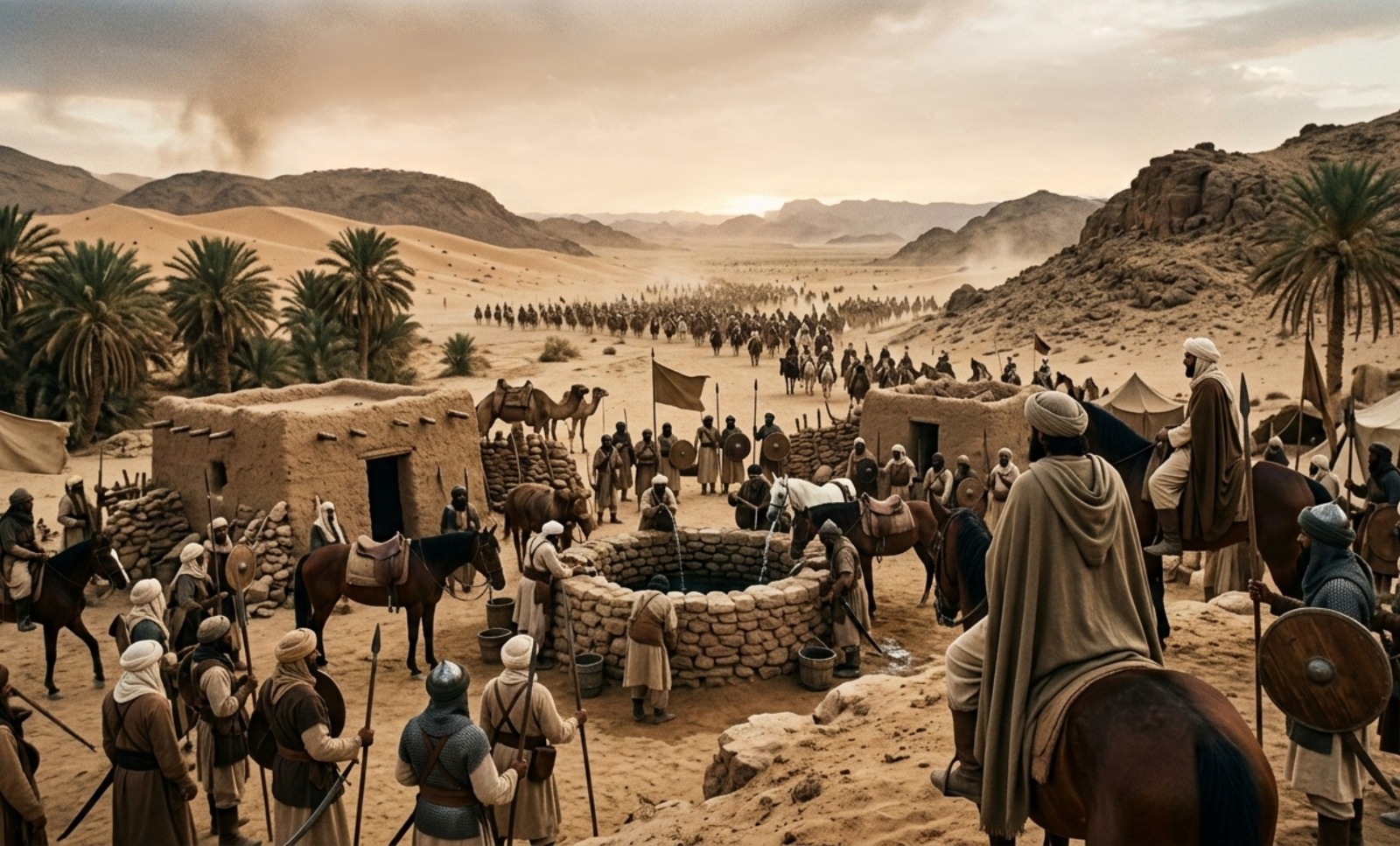
By the year 1260 CE (658 AH), the Mongols had moved into Syria and were eyeing Egypt, the last major stronghold of the Muslim world. If Egypt fell, the holy cities of Makkah, Madinah, and Jerusalem would be next. It was during the holy month of Ramadan that the Mamluk Sultan of Egypt, Saifuddin Qutuz, decided that instead of waiting for destruction, the Muslims would stand and fight. The stage was set at a spring called Ain Jalut (The Spring of Goliath) in Palestine.
The Fasting Warriors and the Cry of “Wa Islamah!”
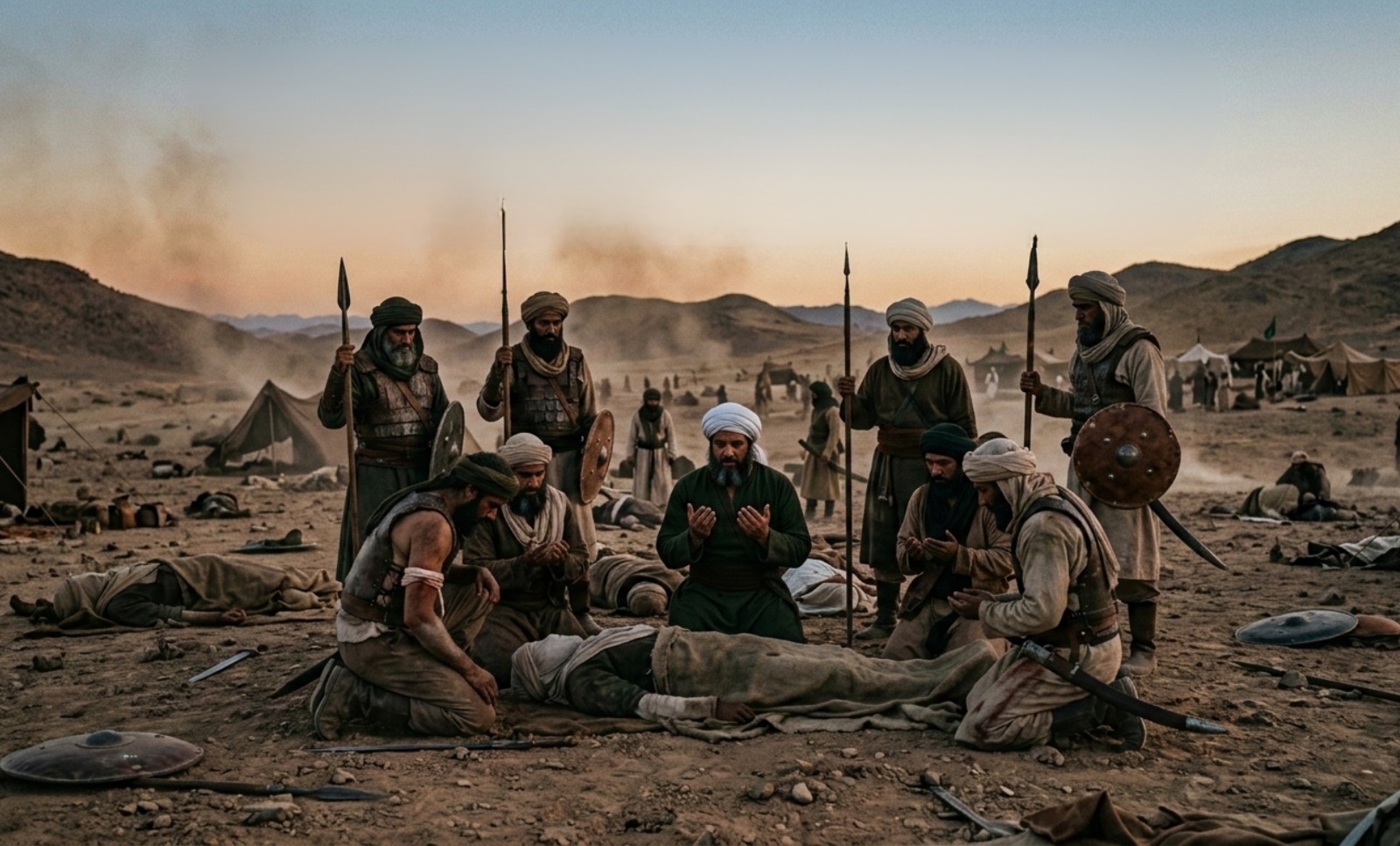
The Battle of Ain Jalut took place on the 25th of Ramadan. The Muslim army, led by Sultan Qutuz and his brilliant general Baibars, was composed of soldiers who were spiritually fortified by the fast of Ramadan. They knew that they were the final line of defense for their faith. The pressure was immense; the Mongols had never been defeated in a major set-piece battle in the region.
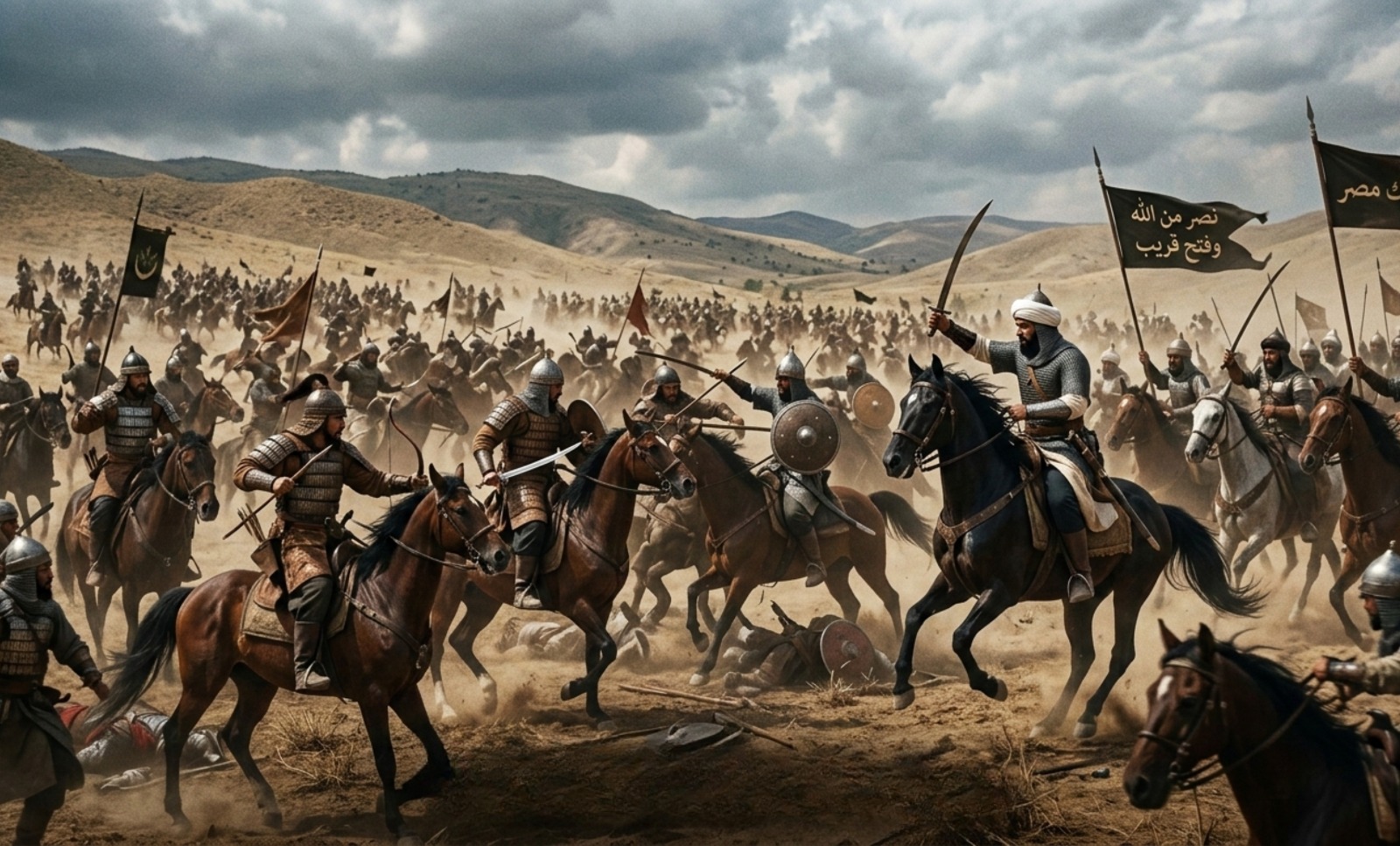
During the height of the combat, the Muslim vanguard began to waver under the sheer brutality of the Mongol charge. Seeing the potential for a collapse, Sultan Qutuz threw his helmet to the ground so his soldiers could see his face and cried out three times: “Wa Islamah! Wa Islamah! Wa Islamah!” (O Islam!). This plea was not just for victory, but a reminder that the very existence of their religion was at stake. The cry electrified the soldiers. Despite the physical toll of the Ramadan heat and their fasting state, the Mamluks regained their footing and pushed back with a ferocity that stunned the Mongols.
Strategic Brilliance: The Feigned Retreat
The victory at Ain Jalut was not achieved through spirit alone; it was also a masterpiece of military tactics. General Baibars employed a classic “feigned retreat.” He led a small portion of the army into the valley, drawing the Mongol commander, Kitbuqa, into a pursuit. The Mongols, believing they had the Muslims on the run, charged deep into the valley of Ain Jalut.
Once the Mongols were fully committed to the narrow terrain, the bulk of the Mamluk army, which had been hiding in the surrounding hills, emerged and surrounded the horde. The Mongol cavalry, famous for their mobility, found themselves trapped and unable to maneuver. For the first time in history, the Mongol advance was not just slowed—it was completely halted. The “invincibility” of the Mongols was shattered on that Ramadan afternoon.
The Shield of the Holy Cities
The consequences of the victory at Ain Jalut were monumental. By defeating the Mongols in Palestine, the Mamluks prevented the invasion of Egypt and, consequently, the invasion of the Hejaz (the region containing Makkah and Madinah). Had the result been different, the history of the world would have looked significantly different today.
This battle proved that Ramadan is a month of strength, not weakness. It showed that when the Ummah is united under sincere leadership and fueled by the spiritual discipline of the fast, it can overcome even the most terrifying “Goliaths” of history. The victory allowed Islamic culture, science, and religion to continue to flourish in the Mediterranean and North Africa, preserving the heritage that we cherish today.
Modern Reflections: Standing Against Modern Goliaths
The story of Ain Jalut resonates with the mission of Children of Adam. Today, the “Mongol hordes” we face are different—they are the forces of global famine, preventable disease, and systemic neglect. These problems often seem “unstoppable” and “inevitable,” much like the Mongol advance seemed to the people of the 13th century.
However, the lesson of Sultan Qutuz is that we must never surrender to despair. When we see a crisis, we must cry out for the sake of humanity and stand our ground. Whether it is through emergency relief in conflict zones or long-term development in impoverished villages, we act as a “shield” for the vulnerable. This Ramadan, as we fast and pray, we remember that our spiritual discipline is meant to give us the strength to face the challenges of our time with the same courage shown at the Spring of Goliath.
Frequently Asked Questions (FAQs)
Who were the Mamluks and why were they significant at Ain Jalut?
The Mamluks were a class of warrior-slaves who rose to power in Egypt. They were highly trained in martial arts and strategy. Their victory at Ain Jalut is significant because they were the first force to decisively defeat a Mongol army in a close-quarters battle, stopping their westward expansion.
What does “Ain Jalut” mean and where is it located?
“Ain Jalut” translates to “The Spring of Goliath.” According to tradition, it is the site where the Prophet Dawud (AS) defeated Jalut (Goliath). It is located in the Jezreel Valley in modern-day Palestine.
How did the month of Ramadan influence the battle?
The battle took place on the 25th of Ramadan. The spiritual significance of the month provided the Muslim soldiers with a heightened sense of purpose and divine reliance (Tawakkul). It remains one of the greatest military victories ever achieved during the holy month.
What happened to the Mongol Empire after this defeat?
While the Mongol Empire remained powerful for some time, the defeat at Ain Jalut prevented them from ever conquering Egypt or the North African coast. It marked the beginning of the end of their era of undisputed expansion in the Islamic world.
Why is Sultan Qutuz’s cry “Wa Islamah” so famous?
It is famous because it represented a moment of total sincerity and desperation. He was calling upon the soldiers to fight not for him or for the state, but for the very survival of Islam itself. It is considered one of the most rallying cries in Islamic history.